Trying to juggle cases, clients, and paperwork the traditional way...
Read MoreAn event management CRM helps businesses organise everything in a centralised system. From managing attendee information to tracking vendor activities and internal workflows, a CRM enables event teams to work more efficiently and improve coordination across departments. Platforms like CRM HUB 360 help event businesses streamline daily operations, improve communication, and maintain better visibility throughout the event lifecycle.
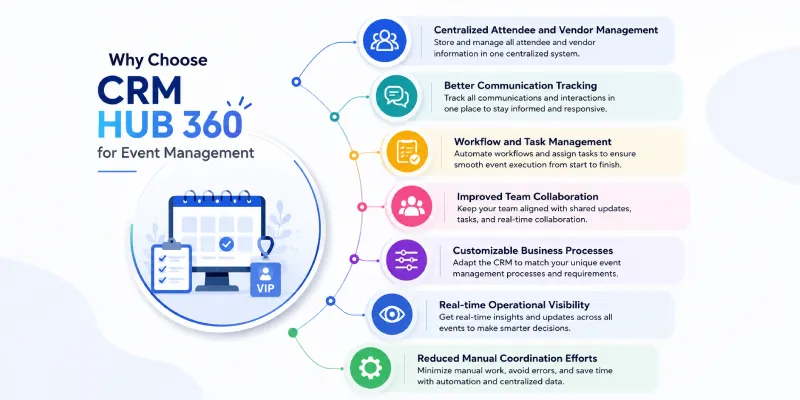
Event management requires continuous coordination between clients, attendees, vendors, and internal teams. Without a structured system, important updates can be missed, tasks may remain pending, and communication can become inconsistent.
By organizing operations in a CRM, event planners can focus on delivering successful experiences rather than managing scattered data and repetitive administrative tasks.
Attendee experience plays a major role in the success of any event. A CRM helps event businesses manage attendee interactions from registration to post-event follow-ups
A CRM can help organize attendee details such as contact information, event preferences, ticket categories, and registration status in a centralized database. This makes it easier for teams to access accurate information whenever needed.
Keeping attendees informed is essential before, during, and after an event. CRM systems help businesses manage communication records, including emails, reminders, confirmations, and follow-ups, ensuring consistent engagement throughout the event process.
During events, teams can update attendee status and track participation activities internally. This helps organizers maintain better coordination and improve event management efficiency.
After the event, businesses can continue engagement by managing feedback requests, follow-up communication, and future event outreach through the CRM platform.
Event planning involves multiple timelines and responsibilities. A CRM helps teams assign tasks, monitor progress, and track important deadlines to ensure smooth event execution.
Vendor discussions, updates, and approvals can be tracked within the CRM system, helping teams maintain better coordination and avoid missed communication.
A CRM can also help businesses track invoices, payment updates, and vendor-related expenses, improving financial visibility during event planning and execution
With better visibility into ongoing activities, businesses can improve accountability and ensure smoother event execution.
Key Advantages
Explore More Related Articles
Event Management CRM for Better Attendee and Vendor Tracking
Trying to juggle cases, clients, and paperwork the traditional way...
Read MoreTravel CRM: Transforming Customer Management for Modern Travel Agencies
In today’s dynamic travel industry, agencies and tour operators must...
Read MoreDiscover ways to connect with your customers with our CRM software.