CRM Logo

Sales Pipeline Management in 2026: Complete CRM Guide

In 2026, the way businesses generate leads has evolved dramatically. Social media campaigns, landing pages, referral programs, WhatsApp inquiries, and website forms are all delivering more potential customers than ever before. Yet, while acquiring leads has become easier, the real challenge lies in managing your sales pipeline efficiently. Without a clear process, leads can slip through the cracks, deals may stagnate, and revenue opportunities are lost.

A well-structured sales pipeline ensures every prospect is tracked, nurtured, and guided toward purchase. This guide explores the essentials of pipeline management, the tools needed, and best practices for 2026, helping businesses transform opportunities into consistent growth.

A sales pipeline is a visual representation of the sales process. It maps out the journey a prospect takes from initial contact to becoming a paying customer. By understanding and tracking each stage of your pipeline, businesses can forecast revenue more accurately, optimize sales strategies, and eliminate bottlenecks.

Lead Generation: Attracting potential customers through ads, referrals, social media, or inbound marketing.

Lead Qualification: Determining which leads are worth pursuing based on interest, budget, and fit.

Engagement and Proposal: Engaging qualified leads with personalized communication and presenting solutions.

Negotiation and Closing: Finalizing terms and converting prospects into customers.

Post-Sale Follow-up: Building relationships for repeat business, referrals, and long-term loyalty.

Understanding these stages is crucial because it allows sales teams to focus efforts on the right leads at the right time.

Managing a sales pipeline effectively has become more critical than ever. Here is why:
  • Improved Forecasting: Businesses can predict revenue more accurately by tracking deals at every stage.
  • Efficient Resource Allocation: Sales teams can focus on leads with the highest potential, saving time and effort.
  • Higher Conversion Rates: Identifying weak points in the pipeline enables better decision-making and process optimization.
  • Better Customer Experience: Timely follow-ups and personalized engagement strengthen trust and satisfaction.
  • Scalable Growth: A clear pipeline ensures that as your lead volume increases, your team can still manage opportunities without chaos.
In short, a structured sales pipeline is not just a tool for organization; it is a revenue multiplier.
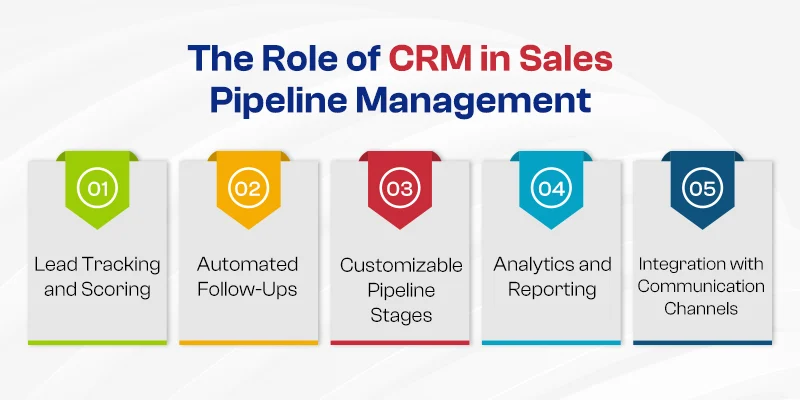
Customer Relationship Management (CRM) systems are the backbone of modern pipeline management. CRMs like CRM Hub 360 help businesses streamline their sales pipeline, automate repetitive tasks, and gain actionable insights.
Some CRM features essential for effective pipeline management include:
  • Lead Tracking and Scoring: Know which leads are most likely to convert.
  • Automated Follow-Ups: Set reminders and schedule emails to ensure no lead is forgotten.
  • Customizable Pipeline Stages: Align the pipeline with your unique sales process.
  • Analytics and Reporting: Track performance, identify bottlenecks, and make data-driven decisions.
  • Integration with Communication Channels: Centralize emails, WhatsApp, and social media conversations for a complete view of every prospect.

By using a CRM, businesses can manage more leads without increasing workload, ensuring that opportunities move smoothly through the pipeline.

Building a high-performing sales pipeline in 2026 requires a strategic approach. Here is a step-by-step process:
  • Define Your Pipeline Stages: Clearly outline each stage of your sales process. Ensure your team understands the criteria for moving a lead to the next stage.
  • Identify Ideal Leads: Focus on high-potential prospects who fit your ideal customer profile. This saves time and improves conversion rates.
  • Set Up Lead Tracking: Use a CRM to monitor leads at every stage. Include details such as source, contact history, deal size, and probability of closing.
  • Automate Routine Tasks: Automate emails, reminders, and follow-ups to free your sales team for high-value activities.
  • Analyze and Optimize: Continuously review your pipeline performance. Identify stages where leads stall and implement strategies to improve flow.
  • Maintain Post-Sale Engagement: A strong post-sale process ensures repeat business, referrals, and long-term customer relationships.

Even with a pipeline, businesses face challenges. Understanding these hurdles and solutions ensures smoother operations:

Stagnant Leads: Leads may get stuck in a stage without progress. 

Solution: Regularly review your pipeline and move or remove stagnant leads. 

Data Overload: Too much information can overwhelm teams.   

Solution: Use CRM dashboards to focus on actionable insights. 

Lack of Consistency: Different team members may follow different processes.   

Solution: Standardize pipeline stages and sales activities across the team. 

Missed Opportunities: Leads can fall through the cracks.     

Solution: Automate reminders and maintain regular follow-ups. 

By addressing these issues proactively, a sales pipeline can operate efficiently and generate more revenue consistently.
  • Regular Updates: Keep your pipeline current to reflect real-time opportunities.
  • Prioritize High-Value Leads: Focus on deals that will impact revenue the most.
  • Leverage Analytics: Use CRM insights to identify bottlenecks and improve decision-making.
  • Automate Where Possible: Save time on routine tasks without compromising quality.
  • Train Your Team: Ensure everyone understands pipeline management principles and best practices.

Following these practices ensures your sales pipeline is not just a process but a growth engine for your business.

A strong sales pipeline is essential for businesses in 2026. It ensures leads are tracked, nurtured, and converted efficiently, helping teams forecast revenue, allocate resources wisely, and improve customer experiences.
Using a modern CRM like CRM Hub 360 makes managing your pipeline seamless, enabling businesses to focus on what matters most: closing deals and driving growth. By implementing a structured pipeline, leveraging technology, and following best practices, businesses can turn opportunities into consistent, predictable revenue.
A well-maintained sales pipeline is not just a process; it is a competitive advantage. Start building yours today and see how structured pipeline management transforms your sales outcomes in 2026 and beyond.

Explore More Related Articles

Discover ways to connect with your customers with our CRM software.